Since last year, I have been attending a course on psychotherapy. During one of its modules, we students were supposed to explore a particular theme personally relevant to us. The theme I explored during that five-day module was belonging. The word first struck me when my peer mentioned it in a one-on-one session. As I heard it, I remembered how, until a few years ago, I had struggled to understand its meaning. So, when it was my turn in the session, I began exploring my connection with that word, and soon uncovered an underlying belief. I noticed that I tend to mix up belonging with codependency or something reductive and limiting. For instance, if I hear someone talk about their sense of belonging to their family, I tend to see that belonging as something that demands a no-matter-what loyalty — often extending to my caste, my religion and country. I seemed to hold the belief that belonging was equivalent to tribalism.
In the next peer session on day two, I continued exploring my belief and ended up with a perennial question: can we belong and be free at the same time? I moved deeper, and then something quietly surfaced. I came into touch with a part that is protective against a certain womanhood.
After that session, we returned to the main room. I looked around at my peers and remembered that they are all women except two. To my surprise, the moment I saw them as women, I experienced an aversion of sorts. Something in me murmured: How dull and predictable they are. Instantly, another part showed up and marked it as a prejudice. That was evident even otherwise, as they all were exceptionally self-reflective, therefore creatively evolving. It was also clear that the aversion I felt was not merely a private thing; it had something of a collective, and even an archetypal nature.
While acknowledging all these, I wondered where those feelings emerged from. Why does that part feel this way towards her?
I sat with that part in the next peer session, and another word showed up: Self-centeredness. It seemed that her self-centeredness is what makes me feel unsafe. As I enquired more, another word popped up — womb. As I started sharing this with my peer, an analogy presented itself. It was about Dickheads and Wombheads.
Let me explain.
A dickhead is someone whose thoughts and activities are driven by a desire to sleep with women; often without any awareness of this motive. He has no deeper curiosity about her or about life in general. He likes her, he likes intimacy, but he doesn’t really know what that means. This man has a counterpart – a wombhead. She likes romancing, to feel all the feelings, which eventually and typically converge into having children. Like the dickhead, she is not always very conscious of all her motives. If desire tends to lead him, being desirable is her preoccupation. She is also not very curious, including about the life that may grow within her or its true scope. She cannot really say why she likes to have children; she just likes it.
Once this facile analogy came out clearly, I wondered about my real concerns hiding in this narrative. What do I really mean when I say dick-womb-headedness? I vaguely sensed that there was something limiting and reductive in that way of living. Then, in the next moment, the Light came — it is that lack of a deeper curiosity and wonder about life that makes it limiting and reductive. That lack is what makes me feel not-so-safe. I can see how that way of living is natural. It embodies nature’s will to life — to procreate. But is that all there is to our existence?
For me, it is evident that we all desire something deeper and substantial. But somehow, practically, a dull superficiality is running the show. Each time I see a wedding ceremony, I’m in touch with both these aspects: there is a genuine intention for something lasting, and then there is a pretentious cluelessness. We settle into the latter eventually, and start to raise children in the same vein. We give those precious beings food, shelter, and entertainment as we educate them to be workers and initiate them into the rat race.
As I have been exploring my trauma imprints in the last several years, I realize that the most traumatic experience in my life was the consistent absence of a sensibility from people around me. The absence of curiosity, a poetic tenderness, or a vision of life that is worthy of me. As I look around, I see the same baseness raising our children everywhere with few exceptions.
How do we keep ending up here?
Open Hearts and Deep Wounds
In Psychology, we have developmental models that describe various stages of a human being’s growth. One such model says that between the ages of 7 and 14, children tend to be very open-hearted and feel abundant love towards everyone. However, being open-hearted is a very vulnerable situation. When children are not met with the same sensibility and sensitivity, that openness results in pain and even humiliation. The consequence is the emergence of a protective-defensive shield that covers the open heart, so that no more pain is experienced. Tragically, the same shield also dissociates children from their own deeper realms — too often, for a lifetime. We learn how to be with ourselves from how others are with us. I’m not suggesting that things tend to derail only during that particular phase. I picked it up, to make the point clearer.
It appears that we are in a vicious loop — those who were emotionally stunted at some point in their lives go on to raise children in the same way. The devastating effects are everywhere — depression, addictions, suicides.
Thus, it has become pertinent to ask what is more to our lives than being a comfort-creature. What is more to our love and sexuality? Why have phallus and womb been sacred symbols of human communities from time immemorial? What is the deeper intention of Nature, underlying our lives? What is the difference between procreation and creativity? Or, the connection between the sensual and the Sacred?
I want to explore these questions first by delving into certain universal conditions of man-woman relating. In that enquiry, I intend to keep women as my main reference. Even though I know that essentially there is no such thing as man or woman, and I want my readers to always keep that in mind, I make that distinction so that our exploration can be well-grounded. If anyone explores gender deep enough, one would necessarily touch upon something Unitive – that which goes beyond gender, relations and even the individual, where the heaviness of categories and conditionings drop. So, keeping that Unitive as a reference, we would later look into how identities tend to crystalize into rigid molds. Yet, we don’t necessarily go into the gender fluid, non-binary aspects of relating in detail, since that might take our discussion away from the key considerations of this writing. In the last parts, we will touch upon the possibilities of intentional communities in the larger context of the decay of nuclear families. With some reflections on open-hearts, hidden wounds and healing, we shall conclude our journey.
I beg your pardon in advance for any mansplaining.
Sex and the Sublime
Women can get pregnant from sex. This is an enormously disproportionate challenge for women compared to men, with lifelong consequences. Nothing can be more personal, intimate and sacrificial than carrying a baby within. And after a very short period, there is no turning back. Later, while giving birth, there is a real risk to her life. A mere act of sex can turn out to be fatal. Thus, sex cannot be an incidental, spontaneous act for women as it can be for men. It naturally demands from her a deeper contemplation and an envisioning of her life, in a long-term manner.
However, once she decides to bear a child and a new life starts to bloom within her, she gets splendidly honoured by Nature — without this willingness from her side, there can be no human species.
Pregnancy is a period of mindfulness. It demands an embodied, moment-to-moment, inner attunement even when she sleeps. It is a non-dual process too; there is no clear point of separation where the mother ends and the baby begins. Ideally, all these culminate into an orgasmic birthing of a new Universe, followed by the bliss of breastfeeding. As she communes with something so tender and pure, she gets in touch with the same realms within — the realms too often denied to her by the world. It is not like the whole process is just rosy and good; instead, the pain, discomforts and even disgust merge with joy to become something inexplicable. All these deepen her, solidly connect her with the Mystical. She gets to experience the entire spectrum of life — from the scariest to the most sublime!
Yet, to navigate through all these well, it is ideal if she has at least one partner with her, devoted to both her and the baby. But unlike women, for a man, such a devotion and the sacrifice it entails is optional. There is no physical necessity that binds him to the mother and baby. If he is not doing it out of social pressure, it is his genuine love and moral integrity that makes him involved. For his sacrifice, Nature abundantly rewards him as well. His carefree naivety transforms into something grounded and mindful. He gets to experience the hitherto unknown poetry and contentment of life, from the heavenly skin to skin touch of the baby, to one of the most beautiful visions of life – a happy woman.
Viewed thus, it is evident that love and sex, made so desirable by Nature, are not merely about procreation, but an invitation to the deeper, higher realms of Being.
One and the Many
A woman can have only a limited number of offspring, if she wants both herself and her children to be healthy. On the other hand, a man can father many more. But if he cares to parent them well, he also needs restraint.
In other words, there is a demand for discernment from both sexes by Nature; again primarily from women. She must choose with whom she wants to have a baby. She must pick someone who would heartily care for both her and the baby for a long time. That means, she must take a virtuous man, rather than someone of fleeting excitement.
To pick from many, she must know what is lasting and what is transient in life in a nuanced way. She is not choosing just a caretaker, but also a mentor for the child, that is, for humankind. To choose such a mentor, she must know what it means to have a human life – its scope and vulnerabilities. And only when she herself embraces and embodies that wisdom, or is at least genuinely receptive to it, she becomes truly ready to mother. Only then can she rightfully expect the same from her partner(s). When she is with such a man, her sense of purpose in raising their child deepens, creating even more ideal conditions for the child.
Like women, Nature has demands on men too. With the natural constraints on time and energy, he must choose where to locate and channel them. And for that, he also needs to know what is lasting and liberative. He must know more than the charming and exciting, as he is also choosing both a mentor for a human being and his Muse. And only when he is self-rooted can he hold a stable space for a woman.
When such a man and woman of shared wisdom or vision come together, there is a possibility to belong and to be free at the same time. In all these, the intention of Nature is clear – it wants humanity to grow wiser, generation after generation. The essence of this wisdom transcends all categories including that of man and woman, and thus, Nature compensates for the differences it created between the sexes. To embody that wisdom is to embody a sense of Sacredness – the Unitive.
Instead, a life that lacks such a wisdom of the Sacred, is bound by the creature-instincts, and the habitual patterns of ego. In the context of man-woman relating as well as that of community life, the difference between these – an ego-driven life and a life based on unitive wisdom – is worth understanding, as here lies the crux of discernment demanded by Nature.
The Ego and the Unitive
Ego, the individual sense of self, has its roots in a unique body-mind. I am this body-mind, says ego. There are fundamental consequences for this identification. One is that everything outside of that particular body-mind becomes – an other. Ego and otherness are inseparable – if one has ego, one has otherness too.
A unique body-mind is perpetually vulnerable. It is always susceptible to sickness, accidents or even death, not to mention failures and humiliations; everything is unpredictable about it. Therefore, exclusive identification with a body-mind produces a constant, underlying insecurity. Unlike this ego which is basically exclusive, the Unitive is inclusive of everything. It is The Common in all of us that makes the words us and we, true and meaningful. In spite of the said exclusivity of our ego, if it is aware of the Unitive, and develops an intimate connection with that, a growing openness and a sense of oneness result. As the ego identifies more and more with That — the inclusive and the lasting — both the otherness and the insecurities dissolve. A carefree joy natural to our Being — universally manifested by children — would shine forth.
A newborn begins to develop their ego — the individual sense of self — through the constant interaction with the community. That means, at some point in their growth, if the individual doesn’t get to develop a living relationship with the Unitive, that individual would solely be defined by the community. The individual would understand themselves — the meaning and purpose of their lives — entirely from the demands and expectations as well as the customs and rituals of the community. Here the individual would be incapable of differentiating themselves from the community; it is a codependent relationship. Such a person’s happiness is always at the mercy of the valuation or devaluation of their community, and so they are bound to become a conventionalist.
In contrast, when the individual is in touch with the Unitive, they would derive their identity primarily from That. The community identity will only have a corollary status. The Unconditional would counterbalance all the categories and conditionings of the community; their sense of oneness would make them citizens of the world, not merely creatures of their province. Such a person’s relationship with the community is that of interdependence.
This dynamic of codependence and interdependence plays out intensely in man-woman relating. If one’s self-identity is primarily derived from the relationship with the other, one’s inner peace is also dependent on the other. Therefore, men and women of such relationship dynamics are inclined to please, control and manipulate the other, at the expense of their authenticity. On the other hand, in an interdependent connection, as they are Self-rooted, the dynamic is, to be and to let the other be.
All these said, ego and its relational/community identifications are degenerative only when they blind us from our Greater roots and hence from our oneness. A human being needs a certain identification with the body-mind to protect itself from, say, a poisonous snake or a maddening world. Ego is a double edged sword – it can be our best friend or worst enemy. Likewise, we are all naturally relational, community beings, without which none survives. An intentional, caring community holds certain nurturing ingredients for a human being which cannot be replaced by anything.
The Sacred Sensuality
We have started our enquiry, exploring the greater intention of Nature underlying the sensual, and how the sensual can sublimate to touch the Sacred in an intentional connection. As we moved further, we also gathered the many layers of discernment demanded by Nature, which qualify us to have such an intentional connection. Now let’s dive deeper to understand love, and also to see how Nature envisions humans to form and sustain intentional communities.
Love and appreciation, whether kindled by a flower, a starry sky, or a beloved, can contain something vast and timeless. Through a unique relationship with something, we get in touch with the universal; a human being becomes the intimate meeting point where the sensual and the Sacred merge into a Whole. Sexual orgasm, a natural culmination of romantic connections, is an example of this embodied, unitive merging. Humans are born out of that orgasmic Wholeness, from a sense of freedom or contentment inherent to it. Viewed in this way, all love implies an innate desire for Union or the potential to realize the Unitive, and that we all want to love and to be loved reveals our source, path and destiny. To live is to love.
Yet, it is one thing to love, and quite another to know what love means. It is a pilgrimage from the non-conscious to the Conscious, and it is the discernment that guides us from the former to the latter. On the other hand, when love is instinctively enacted, without the understanding, it can become the most painful and divisive thing we can have, fundamentally altering how humans form communities.
Where There Is No Love, There Is An Institution.
Love is naturally pregnant with care and generosity; it contains its own sacred morality. We all contain infinite shades of love, and if we are free to explore and communicate them respectfully, the resulting communions would organically weave humanity into interrelated communities.
However, when our love is controlled — as typical in egoistic, codependent connections — and social customs and rituals are built on such a control, instead of abundance and generosity, a sense of scarcity and insecurity descends on us. Love becomes something to be privatized and monopolized. It ceases to be a heartfelt affair, and becomes instead a duty and an obligation. Then we would need governments, police and courts or religious dicta to enforce care or even basic decency among us. All our racist, religious, classist divisions are the outcomes as well as the perpetrators of this essential love-control or of that scarce, insecure, mental state.
Women and Free Will
The constraints on love are primarily targeted towards women. Without controlling her body and free will, none of the sectarian ideologies, systemic inequalities, or the narrow interests behind them can survive. Therefore, if we want to transform anomalies that plague humanity, we must start from ensuring that women are free to exercise their sovereign rights.
But for that, certain material conditions need to prevail for her.
A woman can be a mother at a very young age, and motherhood is a delicate, vulnerable phase. This makes her, more than a man, dependent on the community — including for food and safety of both herself and the child. The need to breastfeed also keeps her close to home – to the relational field. Needs such as feeding her child every day and ensuring their safety continuously, draw her attention to the personal and immediate rather than to impersonal abstractions like society. The same demands also keep her grounded and realistic.
All these intimate relatedness and dependencies on her immediate community make her inclined to align herself with the given value system of that community. She would rather conform than rebel; she doesn’t have the time or even propensity to reinvent the wheel.
In the natural order of things, her affinity, her ability to trust and assimilate her ancestors, is a great strength which makes her a natural holder of inter-generational continuity – a non-negotiable for the survival of humanity. But the same strength can be her sore weakness, once her community gets corrupted, owing to factors ranging from displacement by natural disasters to colonization. The loss of ancestral wisdom along with its universal values can be deranging for her. Her inability to feel restful in nature, and her preference for urban jungles, are sometimes symptomatic of such shifts.
Yet, what if she becomes aware of all these? She realizes that her (patriarchal) community literally owns her, and that for them her happiness is always secondary to societal customs. Or worse, they are so disconnected that they don’t know what true happiness is. She understands these, but then, where could she go? She cannot just leave her home or community and start sleeping on streets. What are her options? Should she leave the crude patriarchy and submit herself to the exploitative bourgeoisie, to have that so-called independence? In a bourgeois world where everything is a commodity to be sold or bought, there is no question of women being treated differently. That means, there are few actual spaces outside of patriarchy and market-morality that are safe, nurturing and spiritually generative for her and her children.
Women necessarily embody Nature’s will to life, including to procreate. But to fulfill that will in the said situation, she must get along with half-wits and internalize their malformed worldviews. As she – the primary educator, caretaker, and community builder of humanity, gets reduced to such folly, everything becomes compromised. Unless this situation changes for her, nothing else can be fundamentally transformed. Even if we make great changes in other realms, if we allow her situation to continue as it is, her will to have children would necessarily draw everything back into the same regressive patterns. Therefore, transforming the world must start from ensuring that she has all the opportunities to take care of herself. That basically means the opportunity to be part of intentional communities living in actual spaces. Places where she can deeply, innerly rest, be in nature, play, grow food and flowers, have pets, be with mentors and just Wonder! It would be great if we can have women-only communities as well, for those who need a deeper rest.
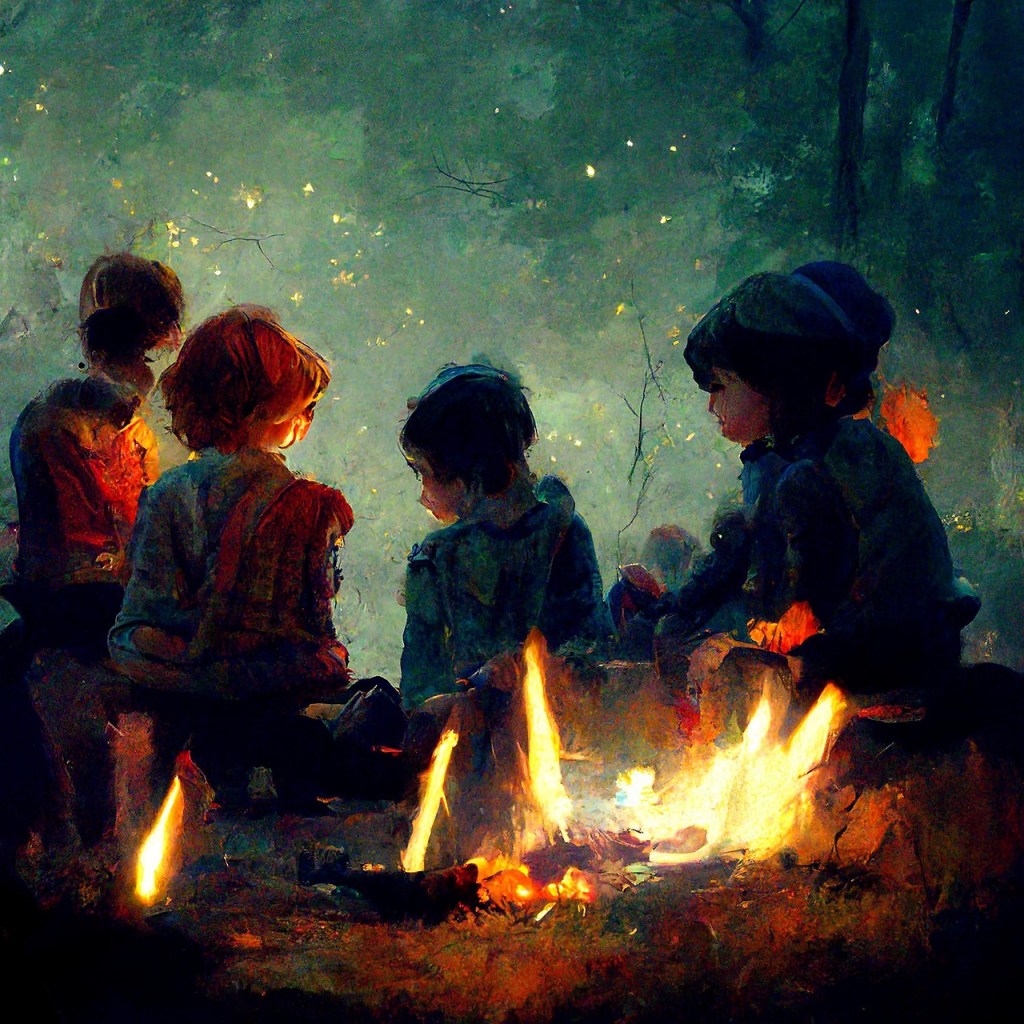
When we have such communities, women would be free to choose or demand not just safety and comfort but also poetry and vision. Even for those women who may not join such communities, the knowledge that such spaces exist could be enormously empowering. Likewise, the knowledge that she can leave spaces of exploitation and join other communities if she wills, would itself encourage people to be mindful.
In the case of men, the constant pressure to feed one’s children (and partner), by participating in a dehumanizing economy, is both numbing and dumbing. There is no way for him to be an ambitious, competitive person from 9 to 7, and to be a sensitive, wise human, for the rest of the day and on weekends. Indeed, he is also in need of intentional communities.
It is quite difficult for a couple to take care of children without an earnest community with them. Exhausted, resourceless couples, often resembling teenagers, have been parenting too many of us for a considerable time. In the natural scheme of life, raising a child is the responsibility of a larger community of elders and peers and is necessary for the wholesome development of the child. Similarly, to grow in the abundance of Nature is the birthright of a child. There are things which children assimilate from Nature – silence, stillness, tenderness, abundance, beauty, vastness, in short, Magic – that no human systems can replace.
If we consider all these along with the free-ranging decay of the modern nuclear family, the relevance of intentional communities cannot be overstated. As mentioned earlier, all such communities can be sustained only when each member has a communion with the Unitive. Then those places could be the wombs of a new and ancient way of being and living, where self-care and common good are unified. However, to embody such an inclusive self-care, certain wounds need to be tended to and healed.
An Inclusive Self-care
If we understand the self only in terms of an individual, abandoning humanity, our self-care is bound to fall short of something truly liberative. This abandonment happens due to many reasons. Following politics and current affairs can be emotionally overwhelming. One can feel so helpless and exhausted, that one might need to dissociate from all that to carry on one’s daily life. The language in which we usually discuss issues is also alienating – abstract, impersonal and statistical – like climate change or environmental protection. It also takes resources and skills to practically engage with things that concern us all.
But deep beneath all our apparent insensitivity and dissociation, it is likely that there is a wound covered by the protective shield which I mentioned in the beginning. It emerged to safeguard our open heart — tender, trusting and joyful, which can effortlessly sense our oneness — from getting hurt, in a harsh, abusive world. But the same shield also induces an overall numbness. Tragically, since the protective-numbing shield usually emerges early in our lives, we forget how the experience of life was, when we were truly open. Instead, the numbness grows with us and the resulting superficiality and narrowness becomes the normal.
Despite these, the inner-tender being would want to come out of that numbing shell, to once again feel its own glory. But in order to experience that, one may first need to feel and tend to the deeply buried pain and grief around what has happened to oneself. Pain and bodily discomfort are nature’s way of inviting our attention and presence to something we are unaware of. Nature would create all sorts of painful situations to make us vulnerable enough to get in touch with our underlying wound. It can be a divorce, a job loss or death. But if we try to distract ourselves from that pain, or numb ourselves further with food, sex, work, drugs, social media, shopping, or worse, with hatred and blame, the core crisis remains. It gets vicious, making us increasingly restless and miserable. If we continue not to heed, the crisis can even manifest as serious illness1.
The Magic is that our wound itself carries the cure and the Light. If we give our inner-being a kind presence, as we may give that to a distressed child, without trying to analyze or fix anything, the transformation begins2. One may also need to grieve for all that has happened, to feel all the feelings, without always falling into the loop of self-pity or victimhood. There is no trauma that is just private; each one of our traumas contains the imprint of traumas of all human beings, past and present. Hence, when we are healing our trauma, we are indeed healing the whole of humanity.
It may take time for things to show up, transform and heal. One may continue inner-listening, and abandon oneself no more, and seek out resources – books and people who share the same priorities. In that journey of recovery there can be lots of triggers. In my own case, I notice that certain situations can trigger me easily, especially if I am tired. Once that happens, I tend to forget the innocence in all of us and react as if we are basically mean. However, triggers are messages from Nature, to make us aware of our (unmet) needs, conditionings, and unhelpful situations, so that our transformation can continue unhindered. Even our worst situations contain an underlying Grace that holds and mends. As we heal, that childlike serenity and sensibility would be more and more present.
I started this writing by sharing how a certain womanhood makes me feel uncomfortable. It, in fact, has nothing to do with womanhood; it is the lack of a wholesome sensibility – whether it’s from man or woman – which invokes such feelings. When we lack that, we treat ourselves and others in a limiting way, which would make all of us feel unseen and unmet. When such situations persist, it becomes difficult to understand what belonging truly means. I tend to project my feelings onto women since as a man, she has a greater, intimate affectivity on me. I have no doubt that many women feel the same way about a lot of men, including me.
As I tread through this not-so-easy, triggering world, I keep a few open secrets close to my heart – our innocence and oneness. If I ever get confused by my own or others’ beliefs or actions, I remember these simple truths: Am I acting in a way that affirms our innocence? Am I doing things that would support and inspire us to embrace our oneness? It’s not always easy, but it’s always worth it. One also needs to remember that it is essentially intimacy that the heart rejoices in. One has to ask: what are the things, situations or people that invoke intimacy – that carefree, playful rest within me? Am I letting myself be intimate with flowers, wind and vastness — melting into a Sweetness so much that I forget myself?
With love and reverence,
S.

