
(An open letter to Arathi Ramachandran, one of the survivors of 2025 Pahalgam massacre in Kashmir, India)
Dear Arathi,
I first saw you in a video where you shared about the Pahalgam massacre and the loss of your father in that tragic incident[1]. You also told us about the kindness and support you received from two local Kashmiri men in the aftermath. That you got two brothers on the same day you lost your father. Your words were deeply moving.
Then, after a few days, I came across another video[2] of you sharing how proud you feel about the attack by the Indian government on the “terrorist targets” in Pakistan. You found the attack “very comforting” and expressed trust that the Indian government will “destroy all terrorists”.
As I finished viewing the second video, I couldn’t help but reflect on these two possibilities within all of us. One, a possibility to feel one with fellow humans, and the other which finds “comfort” in revenge against them. Your feelings are quite understandable Arathi. However, I must tell you that that element within us which can feel “pride and comfort” in murder is the same element that terrorized you on that fateful day. Let me clarify.
The Indian military action which you lauded caused the death of 31 civilians according to Pakistan. Maybe they all are terrorists only. But what if they are not? What if there is an innocent human being among the killed? Can we call such a death collateral damage – incidental to a larger, legitimate, cause? If we can, that is exactly what those terrorists who killed your father had been thinking.
Let’s say all those who were killed in Pakistan are terrorists. Would it justify murder? Are they not human enough to deserve any humane treatment? If the answer is no, that is what those terrorists had also been thinking about their targets.
Now Pakistan wants revenge for the murder of their civilians. Then what about our revenge for the 15 people killed due to Pakistan’s immediate retaliation?
Haven’t we been treading this path for too long? Has it really ensured anyone’s security? If it would have secured safety, we would have had it after India’s surgical strikes and the Balakot attack against Pakistan.
One may wonder what else one can do when attacks like the Pahalgam happen. And strangely, we are acting like not knowing what to do gives us the right to do something, or worse, anything.
In fact, if we truly care about all these deaths and destruction, it is time that we ask ourselves if there is a better, different, path. And maybe we can put that question and a few others to that possibility within us that can feel one with others instead to the other which is revengeful.
How did those terrorists end up like this? Could it be because of some grave injustice and utter helplessness they have personally experienced, just like you Arathi?
I don’t know much about the background of those people who were behind the Pahalgam attack. I know that two of them are Kashmiris, and maybe that explains something.
In order to see what the Kashmiri people have been going through for decades, we don’t have to dig deep into the past. Just look at what the Indian government did in Kashmir in the very next days after the Pahalgam attack: The government had destroyed at least ten houses which belonged to the families of suspected terrorists[3]. But what did those families do to be punished like that collectively? Or who decided that they have something to do with terrorism? Just another collateral damage? Then what is the difference between the terrorists and the Indian security forces and those people who gave them orders? Where is the due process? The rule of law? Is there anything reasonable behind such an act other than blind rage? Indeed it is that same blindness that caused the Pahalgam massacre.
Arathi, you expressed hope that the Indian government will destroy all “terrorists”. But it looks like they are sowing the seeds of more terrorists. Is it impossible that a terrorist might emerge from those destroyed houses, in future, and spread the terror they had experienced?
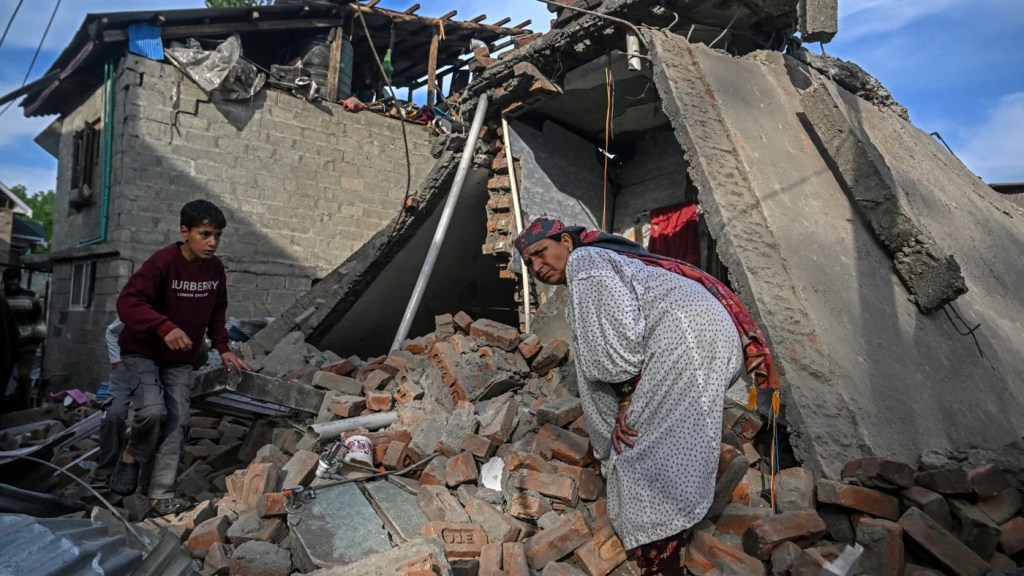
One of the destroyed houses in Kashmir (Image Courtesy: Tauseef Mustafa – AFP)
So, again, what is the better path?
It is the path led by that element with in all of us that can sense oneness. The only impediment to that way of life is the other element which derives its sense of identity and meaning from othering — in its extremity, from hating and hurting. To sustain ourselves in the better path, we need to have a closer look into the human psyche that has both these tendencies.
The human self can move towards two directions, generally speaking. One is directed towards more and more inclusivity and hence towards generosity and compassion. The other element leans towards otherness and insecurity. The latter tendency usually gets accentuated by (childhood) traumas owing to tragic events, such as the loss of dear and near ones. But more often it happens when a child lacks secure relations with mature, sensitive, adults who invoke the same qualities within them.
Consider the present Indian prime minister who has a strong, constant, need for praise or validation. This might be a reflection of an inner child who felt unseen and unheard during his formative years. Or consider the home minister who called Rohingya refugees who were escaping genocide “termites”, and wanted to throw them into the Bay of Bengal[4] — possibly revealing the abusive environment in which he grew up.
Most of the time such harshness within a household will not be an isolated issue relevant to that particular family. It can be both a collective and inter-generational culture that a family has imbibed. For instance, there are too many families that are typically entangled in caste and religious identities, that is, in the narrative of us and them. As time passes, such households would become more and more out of touch with reality (oneness) and hence delusional and arbitrary in their perceptions and actions. Children growing up in such narrow-minded, unkind or harsh families must repress all that harshness they receive, as they cannot change their circumstances. Those repressed feelings eventually turn into resentment and rage which they later unleash on underprivileged others as they become adults. In other words, the mixture of otherness and insecurity grows with them, eventually ending up as their very self-identity — that which defines who they are. Their venting of negative emotions is inevitable, as it temporarily eases the deeply buried dis-ease within their bodies caused by the prolonged repression.
They tend to get easily fixated on organizations like RSS or Jamaat-e-Islami, founded on the same us and them narrative, as these can serve as socially sanctioned outlets for their negativity. For many, such associations also give their alienated ego some relief by being part of something larger than themselves and by giving them a sense of belonging.
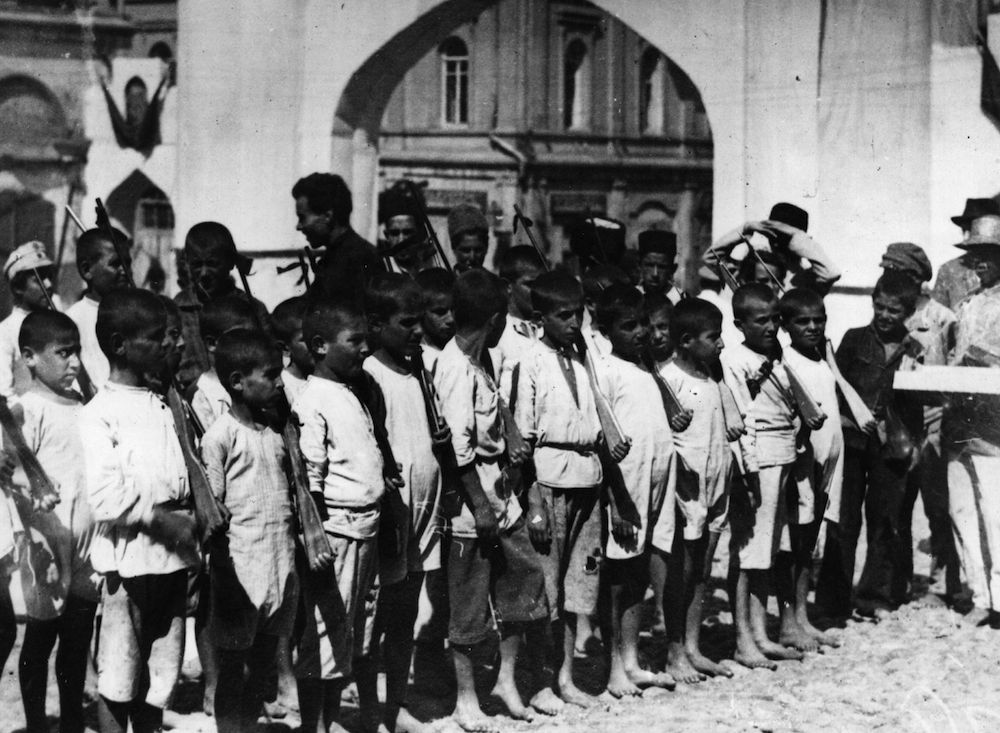
Harshness can also result from economic hardship — from the constant humiliation in being poor. Remember Ajmal Kasab, the 21 year old militant who got caught in the Mumbai attack? This is what his father Amir Kasab, a street vendor, shared when he identified his son: “He had asked me for new clothes on Eid that I couldn’t provide him. He got angry and left”.
Consider all those rulers and organizations with such hardened otherness; consider all the hate speeches and lynchings they have been supporting. Only in October last year (2024) they have decided to move fifty thousand to one lakh Dharavi slum residents in Mumbai, the poorest among us, to a landfill that emits more than six tonnes of lethal methane every hour[5]. Do you, Arathi, really think that they are capable of ending terrorism?! They are, in fact, prone to use your grief to grab more power and spread more trauma.
If you are wondering what can we do to get justice for the deceased, I would say, only by doing justice. By making sure that our words and deeds honour our shared existence; by insisting on healing rather than on hurting. By demanding trauma education for all, including for those who are part of the State apparatus[6] [7]. By asserting sanity, reason and rule of law and by refusing to accept the parochial ideas of religion and nationalism. More specifically, by trying to understand the violations being endured by the Kashmiri people in the hands of Indian State, on a daily basis[8].
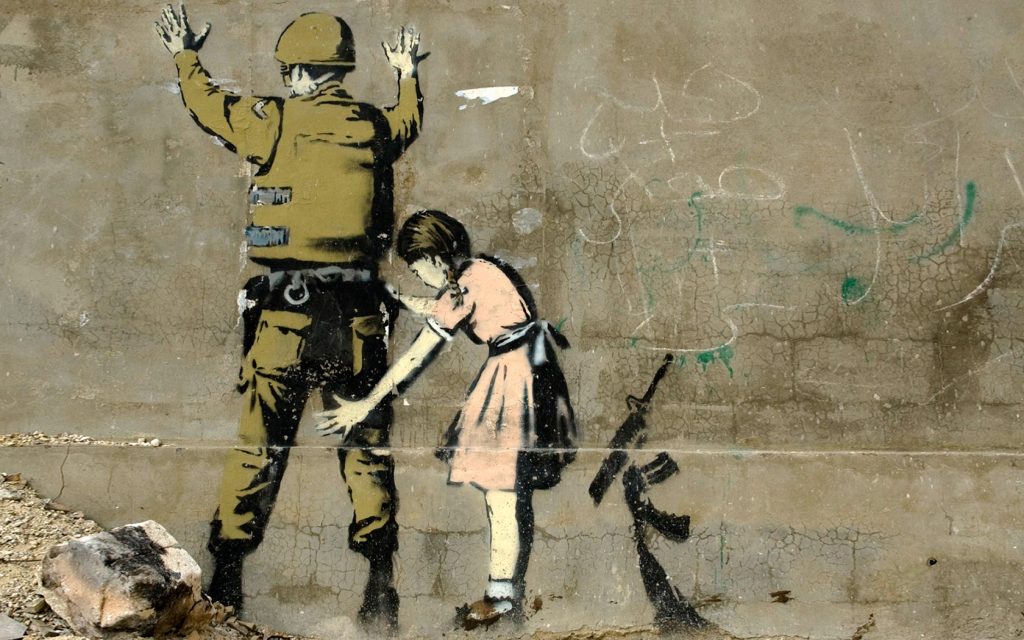
Image Courtesy: Banksy
We also need to understand that we cannot resolve issues merely by going back to history and by investigating who wronged whom and when. Because understanding of history is always susceptible to personal and collective biases. Besides, any atrocity can be traced back to another atrocity or wounding from an earlier time. However, our common existence is a reality beyond interpretations. Our healing journey must be founded on that. I’m not denying the importance of accountability. However, we need to be mindful about the purpose of having that process. Is it to heal or to hang? Making someone, some group, solely responsible for their actions is the narrative of the disconnected.
Both divisive and unitive tendencies are ever-present within us. Life would put us in junctures where we have to choose between these more often than we think. Hence choosing the unitive needs to be understood as a lifelong intention and a moment to moment practice.
Jesus says: Blessed is the lion which a human being eats so that the lion becomes a human being. But cursed is the human being whom a lion eats so that the human being becomes a lion![9]
The lion here is our powerful, othering instincts and the human being is the one who can reflect and comprehend the unity of everything.
Pray, these make sense…
love,
Shyam Bodhisattva.
[1] https://www.youtube.com/watch?v=XDdRBfOpEU8
[2] https://shorts.mathrubhumi.com/pp4u2OwI
[3] https://frontline.thehindu.com/news/pahalgam-attack-kashmir-demolitions-pulwama-crackdown-collective-punishment/article69533825.ece
[4] https://www.reuters.com/article/world/amit-shah-vows-to-throw-illegal-immigrants-into-bay-of-bengal-idUSKCN1RO1YC/
[5] https://www.financialexpress.com/india-news/adanis-dharavi-roadmap-maharashtra-clears-plan-to-move-over-50000-residents-to-dumping-ground/3806164/
[6] https://thewisdomoftrauma.com/
[7] https://indianexpress.com/article/cities/pune/war-not-bollywood-movie-violence-ex-army-chief-general-manoj-naravane-9997636/
[9] Gospel of Thomas, Verse 7.

